Mercy Over Vengeance: 3 Beautiful Anecdotes
In the face of brutal colonization, history often remembers only the clashing of steel and the roar of cannons. However, the true legacy of the great Muslim liberators of the 19th and 20th centuries wasn’t just their tactical brilliance—it was their unwavering adherence to Prophetic ethics even when their enemies showed none.
History shows us that while empires are built on conquest, hearts are won through character. Here are three powerful accounts of leaders who chose mercy over vengeance.
1. Omar Mukhtar
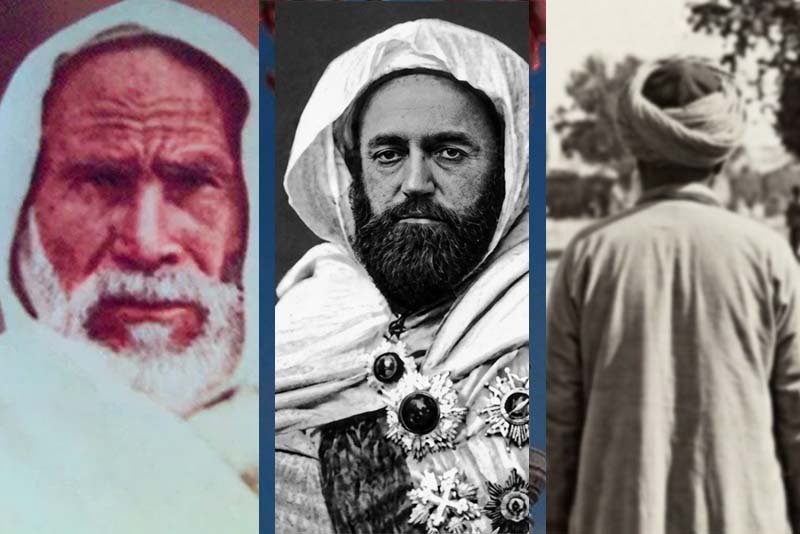
Between 1911 and 1931, the “Lion of the Desert,” Omar Mukhtar, led the Libyan resistance against Italian colonization. The conflict was asymmetrical and incredibly violent; Italian forces utilized concentration camps and chemical weapons, resulting in the deaths of thousands of Libyans.
After a particular skirmish, Omar Mukhtar’s fighters captured two Italian soldiers. Fueled by the grief of seeing their families killed, the fighters demanded an immediate execution. Mukhtar refused. When his followers protested, shouting, “But they kill us brutally!” Mukhtar calmly replied:
“They are not our teachers.”
He made it clear: their moral compass was set by the Prophetic example, not by the cruelty of those who sought to destroy them.
2. Allama Fazle Haq Khairabadi
Allama Fazle Haq Khairabadi was a polymath and a key figure in the 1857 Indian Rebellion against British rule. For his “fatwa” (legal decree) against the occupiers, he was exiled to a notorious prison in the Andaman Islands, a place of immense suffering and isolation.
Despite being stripped of his freedom and living in misery, his intellectual and moral integrity remained intact. When the British prison superintendent brought him a Persian manuscript for minor corrections, Allama did not respond with bitterness. Instead, he:
- Extensively edited the entire text.
- Added brilliant scholarly explanations in the margins.
- Refined the work to such a degree of excellence that it reportedly brought the superintendent to tears.
Even as a prisoner of the Crown, Khairabadi proved that a scholar’s pen and a believer’s grace cannot be shackled.
3. Emir Abd al-Qadir
After leading a 15-year resistance against the French invasion of Algeria, Emir Abd al-Qadir al-Jazairi was eventually exiled. In 1860, while living in Damascus, a violent riot broke out between the Druze and Christian populations.
As a massacre loomed, the Emir did not remain a bystander. He and his Algerian companions personally escorted over 10,000 Christians into his own home and the citadel to protect them. When an angry mob arrived at his door demanding he hand over the “infidels,” he stood his ground, citing the Prophet’s command to protect the innocent.
His actions earned him the Grand Cross of the Legion of Honor from France and accolades from leaders like Abraham Lincoln, proving that the “Sword of Islam” was equally a “Shield for Humanity.”
The Enduring Legacy
The physical empires of the colonizers have largely crumbled, but the spiritual legacy of these men remains. It was the generosity and beauty of the Prophet’s ﷺ character, mirrored through these leaders, that allowed the message of Islam to resonate across the globe.
As the scholar Kefayet Ali Kafi famously wrote in his final verses before being executed by British colonizers in 1857:
Koi gul baqi rahega na chaman reh jaayega, Par Rasulullah ka deen-e-hasan reh jayega…
“No flower will be left, nor will any garden remain, But the beautiful religion of Rasulullah ﷺ will forever endure.”
- The Saint & The Sword by Dr. Farah El Sharif
- Life & Thoughts of Allama Fazl-e-Haq Khairabadi Published by Jamiyatul Muallimin (Andaman Nicobar)
- OnePath Network, Wikipedia, Historical Archives etc.