Dr. Naoki Yamamoto: Bridging Japanese Tradition and Tasawwuf
Dr. Naoki Yamamoto embraced Islam 17 years ago while an undergraduate student in Egypt. Today, he serves as an assistant professor at Marmara University and is a recognized scholar in Ottoman Tasawwuf and traditional Japanese culture.
His journey began in Kyoto with a library book titled A Brief Introduction to Allah, authored by Khawla Nakata Kaori. Drawn to its message, he attempted to contact the author, only to find she had passed away. Her husband, Professor Hasan, met with Naoki and shared a transformative Hadith: that a person’s good deeds continue through the beneficial knowledge they leave behind.
Professor Hasan became Naoki’s Sensei, introducing him to a global Muslim community that dismantled his existing stereotypes. The journey reached its turning point in Cairo. Naoki was moved not by a promise of easy happiness, but by the Professor’s sincere admission that faith is a journey for the flawed and weak. Witnessing the integrity and hope that Islam provided the Professor in the face of personal loss, Naoki embraced the faith.
Having been raised in a Japanese spiritual environment, Dr. Naoki grew concerned about the rapid westernization of Japanese society. While in Turkiye, he discovered a profound connection between Japanese cultural elements and Sufi traditions. He observed that the spiritual aspects of the Japanese Tea Ceremony mirror the culinary service of the Mevlevi Order. The tea ceremony philosophy of accepting one’s imperfections finds a parallel in the Sufi philosophy of nothingness. Furthermore, the master-disciple relationships found in Shonen Manga reflect the peer-mureed dynamics of the Tariqah, including the shared emphasis on repentance and Tawba.
Recognizing these similarities, Dr. Naoki took the initiative to connect Japanese youth to the spirituality of Tasawwuf. He works to merge these two worlds through several avenues:
- Translating and writing works on Tasawwuf in the Japanese language.
- Blending Japanese art and calligraphy with Sufi literature.
- Hosting workshops, such as the Japanese Tea Ceremony, to present the shared elements of both spiritualities.
- Applying the principles of Japanese swordsmanship to Futuwwa education.
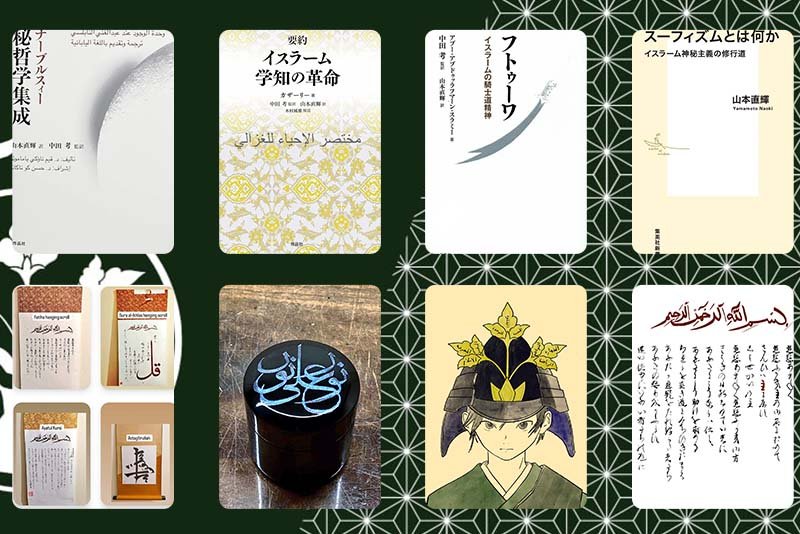
His published works in Japanese include a collection of al-Nablusi’s mystical philosophy, a translation of as-Sulami’s Kitab al-Futuwwa, an introduction to Tasawwuf compared with Shonen Manga, and a translation of Imam Ghazali’s Mukhtasar Ihya Ulum ad-Din. The ultimate objective of Dr. Naoki Yamamoto is to demonstrate to the Japanese people that Islamic culture is a neighbor sharing the same spiritual heart.